2.08.2011

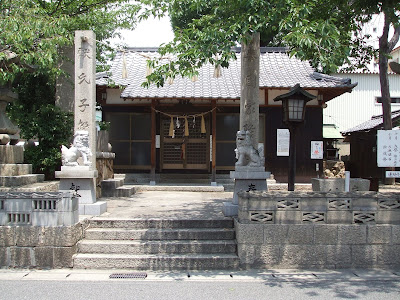
Chikkou Hachiman Shrine

Originally, this ground was named the Hirogata Salt Field. The Shiogama Shrine here was dedicated to the Salt Pot God.
At the end of the Meiji era, Chikkou Hachiman Shrine was built in the same precincts of this shrine. The new shrine was moved here from Tai Hachiman Shrine.

送信者 宇野港散策歴史マップ

送信者 宇野港散策歴史マップ
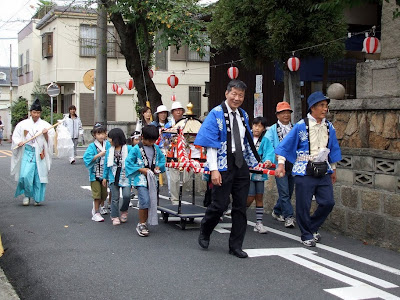
The mikoshi is paraded down this street when there's a festival.


Uno Hachiman Shrine

When this hill was still an island, the Jingu Empress called here and stayed for several days.
Some fishermen's wives carried a huge sea bream on their heads and presented it to the Empress.
It is said that after that event, many fisherman’s wives put fish on their heads and participated in the annual Autumn Festival ceremony in October.
送信者 宇野港散策歴史マップ

The Legend of Ojigatake Hill and the Museum of Art

In the old days, eight princes of Princess Kudara were said to have lived at Ojigatake Hill. Their names - Shibasaka, Sakate, Hazuwari, Mine-no, Hi-no, Suzunage, Tani-no, Kamewari - are now recorded in the tombstone and at the Shinto Shrine, there.
At Ojigatake Hill Museum of Art, two hundred antiques are displayed including Japanese traditional ceramics, sword guards and pictures .

送信者 宇野港散策歴史マップ

Uno Port was Built by Higaki Naosuke


Governor Higaki
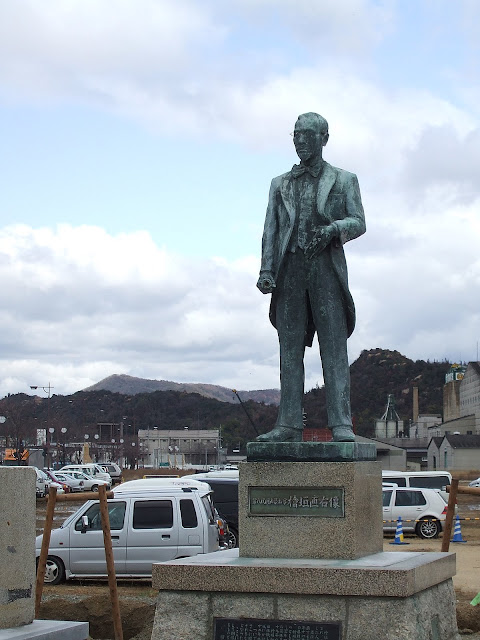
Higaki Nosuke, the governor of Okayama Prefecture had an idea to open the port in 1898, then worked on the planning in 1906. He said, “We need Uno Port as a sea gateway for Okayama Prefecture”. Modern Uno Port was opened in 1909 which was designated as the first trading port in Okayama Prefecture in 1930. Since then the port has been contributing to the development of Tamano City. You will find a bronze statue of Mr. Higaki in the Uno Port Park.


送信者
Picture of Naosuke Higaki,around 1909
送信者 宇野港散策歴史マップ
Statue of the 8th Governor of Okayama Pref, Naosuke Higaki


Siebold and Hibi Port

When Siebold (Philipp Franz Balthasar von Siebold, 1796-1866) traveled back and forth between Nagasaki and Edo, he stayed at Hibi Port and visited the sea salt fields.
Siebold published his travel sketch book, “NIPPON” (“Reise nach dem Hofe des Sjogunim Jahre 1826”), which includes the details of his visit and some of his impressions.

Wisteria Shelf

This Wisteria Shelf has a length of about 900 meters, and blooms splendidly every spring.
Every year the Wisteria Festival is held from April to May.

2.07.2011

Saigyo and Shibukawa Coast

Retired emperor “Sutoku” bested in Hogen combat was exiled from Kyoto to Shikoku, where he lived a life of seclusion and ended up there.
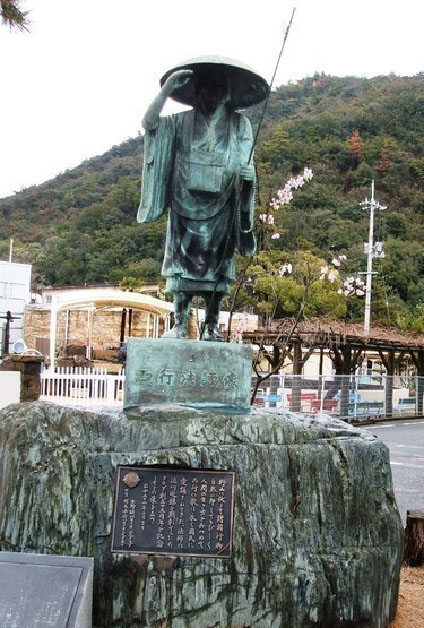
Saigyo is trying to visit his tomb in Shikoku, he stayed at Shibukawa Coast because of a storm. Saiigyo’s collection of poems, "Sankashu" includes some songs, he made during his stay. Every year the Saigyo Festival is held in February and
March on this coast.
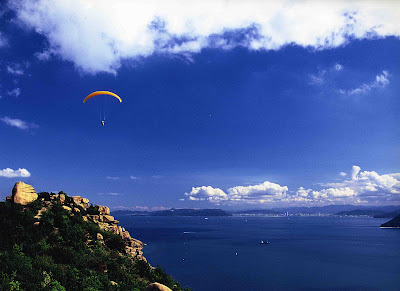
Shibukawa Coast, is included among the "top one hundred famous sea sports" and "top one hundred famous white sand and palm-shaded beaches".


送信者 宇野港散策歴史マップ